
Carbon Parole Versus Probation
Parole and probation are both forms of community supervision, but they begin in different places. The Utah Board of Pardons and Parole decides whether and when an eligible person may leave state prison on parole. Utah Department of Corrections Adult Probation and Parole, usually called AP&P, then supervises that person. A Carbon County court imposes probation as part of a judgment. Probation may follow a county-jail term or may be ordered without any state-prison stay. AP&P supervises the probation term, but the agency does not impose it.
The distinction controls which record proves the status. A Board order supports a parole grant, date, rescission, or termination. A court judgment and later docket entries support probation. The live UDC Offender Search can help locate a person who remains under UDC supervision, yet it is not a complete history of everyone who once had parole or probation in Carbon County.
| Point | Parole | Probation |
|---|---|---|
| Who orders it | Utah Board of Pardons and Parole | The sentencing court |
| What it follows | Release from a UDC prison term | A court judgment, with or without jail |
| Who supervises | UDC Adult Probation and Parole | UDC Adult Probation and Parole |
| Best proof | Board order plus UDC status | Court order plus UDC status |
- Parole
- Conditional community supervision after release from state prison.
- Probation
- Court-ordered supervision that may be imposed instead of, or after, jail.
- Discharge
- The formal end of the relevant correctional sentence or supervision term.
- Absconder
- A supervised person alleged to have stopped reporting or left supervision without approval.
Verify Carbon Post-Release Supervision
Begin with the system tied to the sentence. The UDC Offender Search covers people currently incarcerated or supervised by UDC. Search by UDC number when known. A name search needs at least one letter in both the first and last name fields. Results list the offender number, name, and date of birth. Open the matching record and read the location, assigned facility, release date/type, and case-manager details that are actually shown.
A location of PAROLE strongly indicates that prison custody ended while supervision remains active. A probation label does not prove any prior prison release. If no record appears, the person may be fully discharged or outside UDC's current-supervision scope. Historical proof then moves to the Board archive, the sentencing court, or a UDC records request. The Carbon County released-inmate search path explains how county, state, court, and federal records differ.
- Confirm the person's full name, date of birth, and UDC number if known.
- Search UDC and compare more than the name before opening a result.
- For parole, search the Board's published hearings and decisions for the controlling order.
- For probation, inspect the Carbon County court judgment and later supervision entries.
- Call Region 6 Price when a public record needs confirmation or local routing.
- For a completed term, request the discharge or termination record from the responsible agency.
Note: UDC's live index covers current supervision, so a no-result cannot establish that Carbon County supervision never existed.
Carbon Parole Decision Records
The Utah Board hearing and decision portal accepts a first and last name, offender number, or date range. It returns scheduled hearings and published decisions. Those orders may grant parole, set another hearing, add a requirement, rescind a date, or terminate a sentence. A tentative hearing month estimates when a hearing may occur. It is not a release date.
Utah uses indeterminate felony sentences. The court sets a lawful range, while the Board decides actual time within that range under governing law and the case record. The Board does not issue its decision on the hearing day. Its published information says decisions usually take two to six weeks. A later rescission hearing can remove a date before release. For that reason, read the latest order and check for later entries rather than relying on one calendar listing.
The official portal is especially useful after full discharge because the Board has digitized more than 350,000 historic decisions. A historic order documents what the Board did at that point, though a later order may control. The image below comes from the official Board search.
View the Utah Board hearing and decision search before comparing a Carbon County parole record.
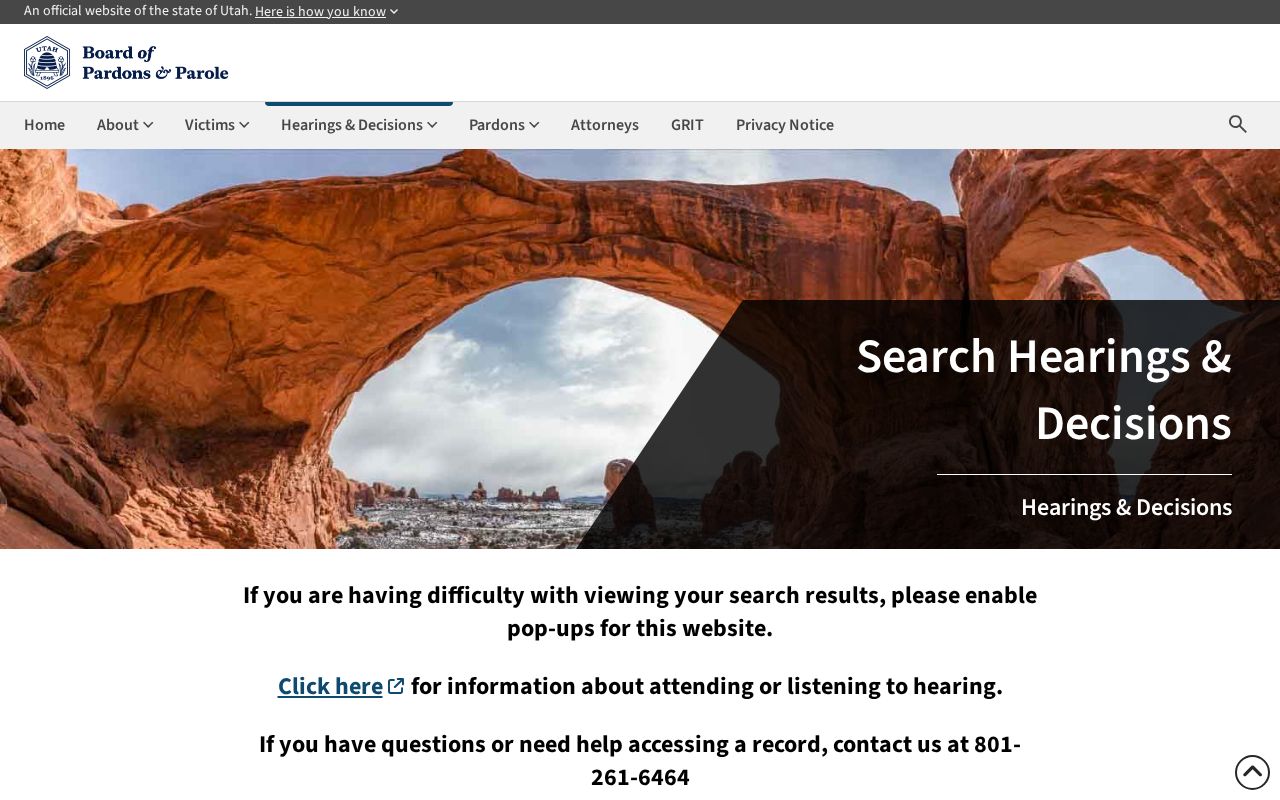
The search screen shows the official route for finding a scheduled hearing or published decision without treating a tentative hearing date as release proof.
Carbon Supervision at Region Six
Carbon County residents have a named local supervision office. AP&P Region 6 Price covers Carbon and Emery counties and the eastern half of Wayne County. The office is a routing and supervision point, not a public release list. Staff can help distinguish an active parole or probation case from a completed term when a public search is unclear, subject to privacy and agency rules.
The contact details below come from the official UDC probation and parole directory. Call with the person's identifying details and a clear question. Ask whether the office can confirm the correct region, explain which public record governs, or direct a records request. Do not ask the office to treat the offender search as a warrant index.
UDC Adult Probation and Parole, Region 6 Price1365 S. Carbon Avenue
Price, UT 84501
435-636-2800
Review the official Region 6 Price listing before contacting the office.
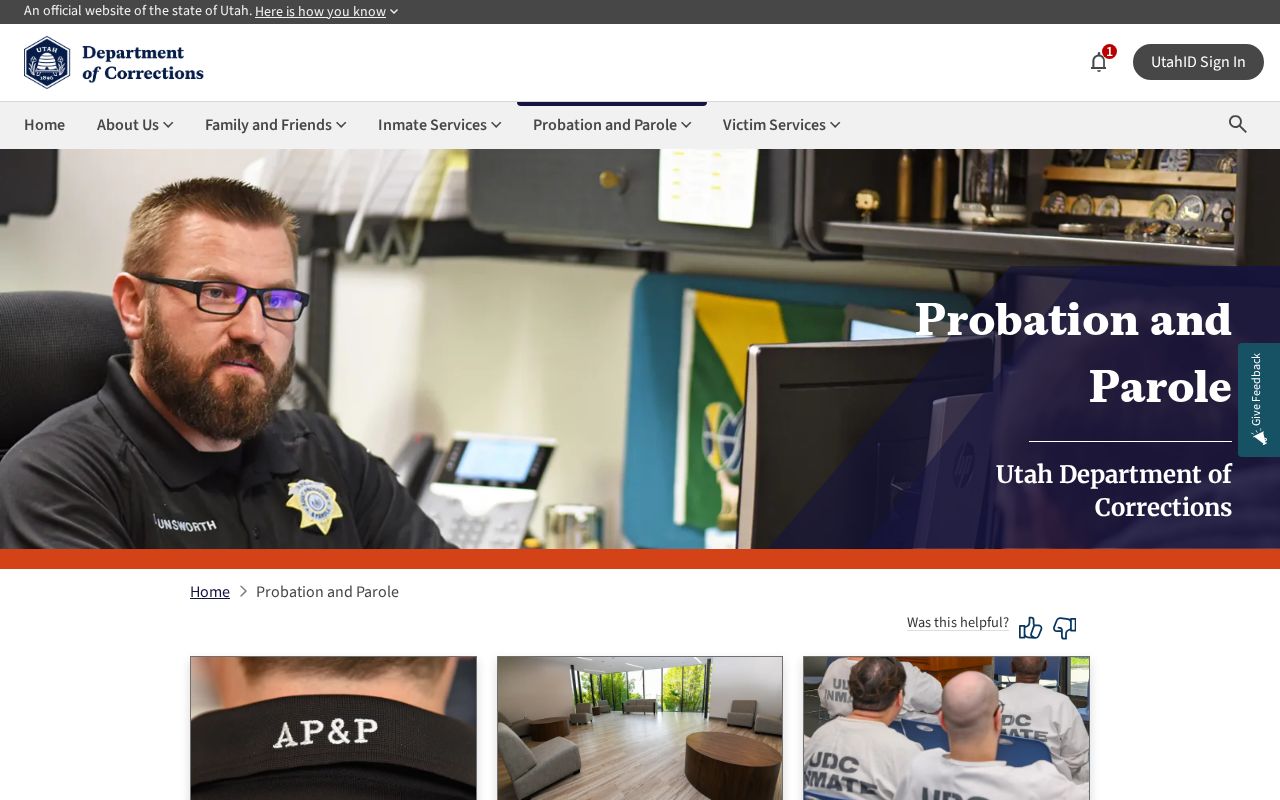
The directory confirms that Carbon County supervision has a local Price office rather than an unspecified statewide contact.
Carbon Release Support in Price
The Price Treatment Resource Center shares the Region 6 address and serves people already in the supervision system. UDC lists Moral Reconation Therapy, co-dependency, relapse prevention, maintenance, risk reduction, and Strengthening Families at this location. Those are program routes, not search fields. Participation or referral must be handled through the supervision process.
For local navigation, call 435-636-2800 extension 817. The UDC Treatment Resource Centers page is the source for the Price programs. This Carbon County resource is useful after state release because it links supervision with services in the same city. It cannot certify a release date, replace a Board order, or show a county-jail release outcome.
See the official Price Treatment Resource Center listing for the current program description.
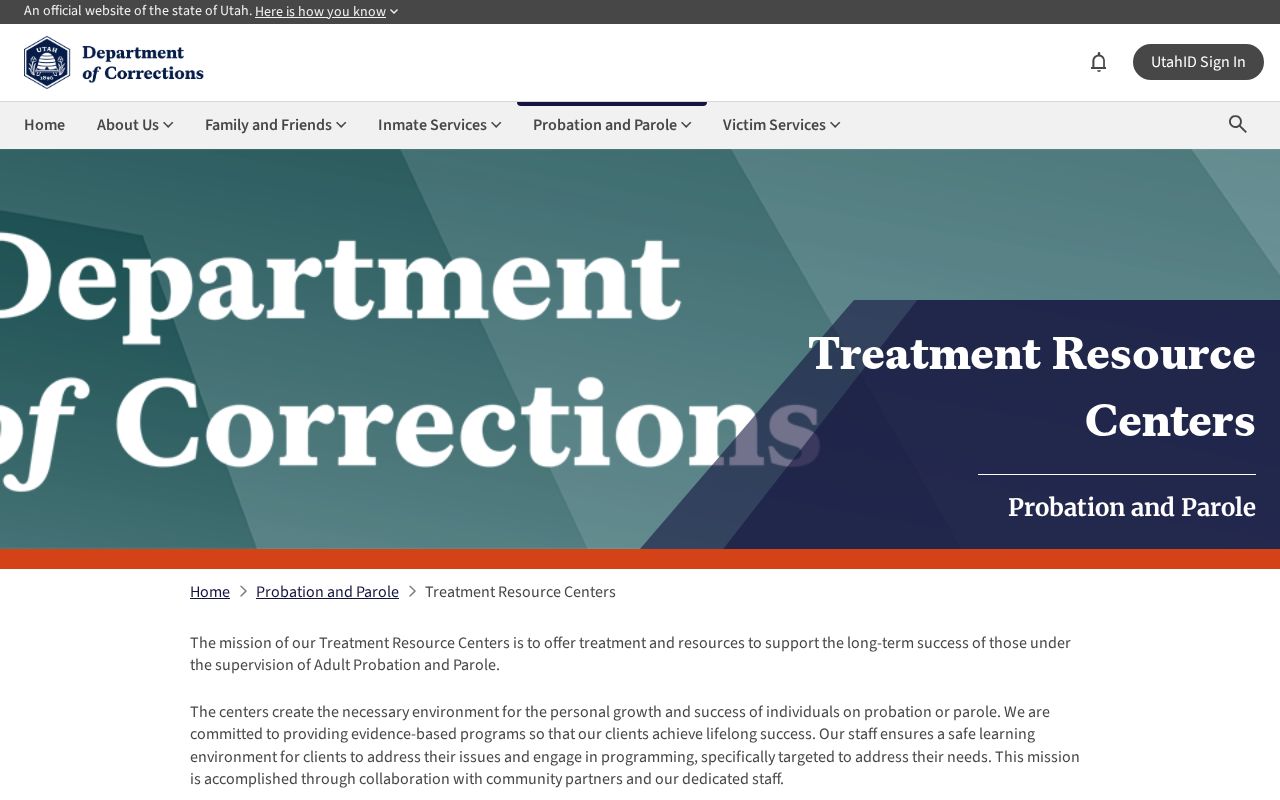
The state listing connects Carbon County supervision to a concrete local resource while keeping release verification in the proper official records.
Note: The Price center supports supervised people, but it does not publish parole, probation, release, or discharge status.
Carbon Supervision Violations and Warrants
Conditions are rules attached to parole or probation. Their exact terms come from the Board order, court judgment, and supervision documents. A violation allegation does not by itself show the final outcome. The Board may hold a parole-violation hearing, and a court handles probation action within its authority. The most recent order or docket entry is stronger than an old status label.
When a supervised person absconds, UDC says AP&P agents seek a warrant and work with the UDC Law Enforcement Bureau and partner agencies. No official public statewide AP&P absconder-name search or Carbon County absconder list was found. The UDC offender search is not a warrant search. A PAROLE label also does not prove that a person is complying with every condition.
Confirm an alleged warrant through AP&P, the court with the case, or law enforcement. VINE may send some custody or movement notices, but it is not a warrant record and can have technical delays. A transfer notice is not proof of community release. Keep the supervision question separate from the current custody question.
Carbon County court routing depends on the case. The county Justice Court handles class B and C misdemeanors, ordinances, and infractions for the county, Price, Helper, and Wellington. Seventh District Court handles class A misdemeanors and felonies. The court docket can preserve a probation violation, revocation, or termination entry after a live corrections result changes. Ask the clerk for the public case record tied to the exact case number rather than treating an arrest record as the supervision order.
Carbon Supervision Discharge Records
Supervision ends through an official action or expiration process. For parole, the Board order and glossary supply the controlling language, including termination or sentence expiration. For probation, the court docket may show successful completion, early termination, revocation, or another order. Simply disappearing from UDC Offender Search does not prove which event occurred.
For historical parole, preserve the final Board order and check the decision portal for later orders. For probation, obtain the judgment and the later entry that ends the term. If the public systems do not provide enough detail, use the UDC GRAMA process or request the public court record. GRAMA is Utah's Government Records Access and Management Act. It permits a specific request for an existing record, subject to classification and lawful redaction.
A focused agency request should name the person, UDC number if known, date of birth, approximate dates, and the existing discharge or termination record sought. For a court case, include the case number and request the judgment plus later orders. This keeps the request tied to records the office maintains. It also avoids confusing the end of one supervision term with the end of every possible case.
Note: A discharge record proves the end of the named term, while a separate case or authority may still control another status.